Skip to content
New Print "1 bar" on the label instead of "1 piece"

Recipe in, Nutrition Facts out.

Formulate is BetterMenu’s US Nutrition Facts label maker for food brands and co-packers. Every nutrient value shows its source and FDA rule. AI suggests matches and weights, you review each, and every version is kept.

Free to start. No card needed.

In Studio, the label is laid out for you and exports as PDF, PNG or JPEG.
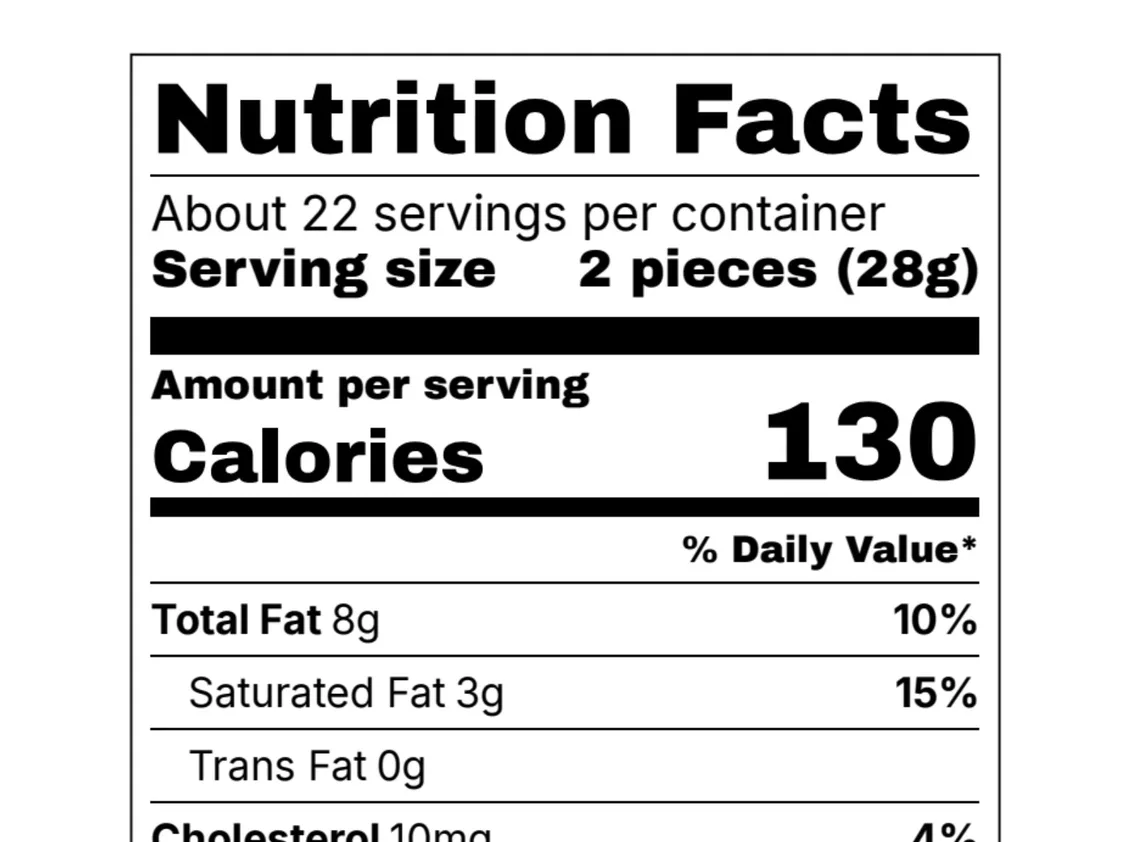
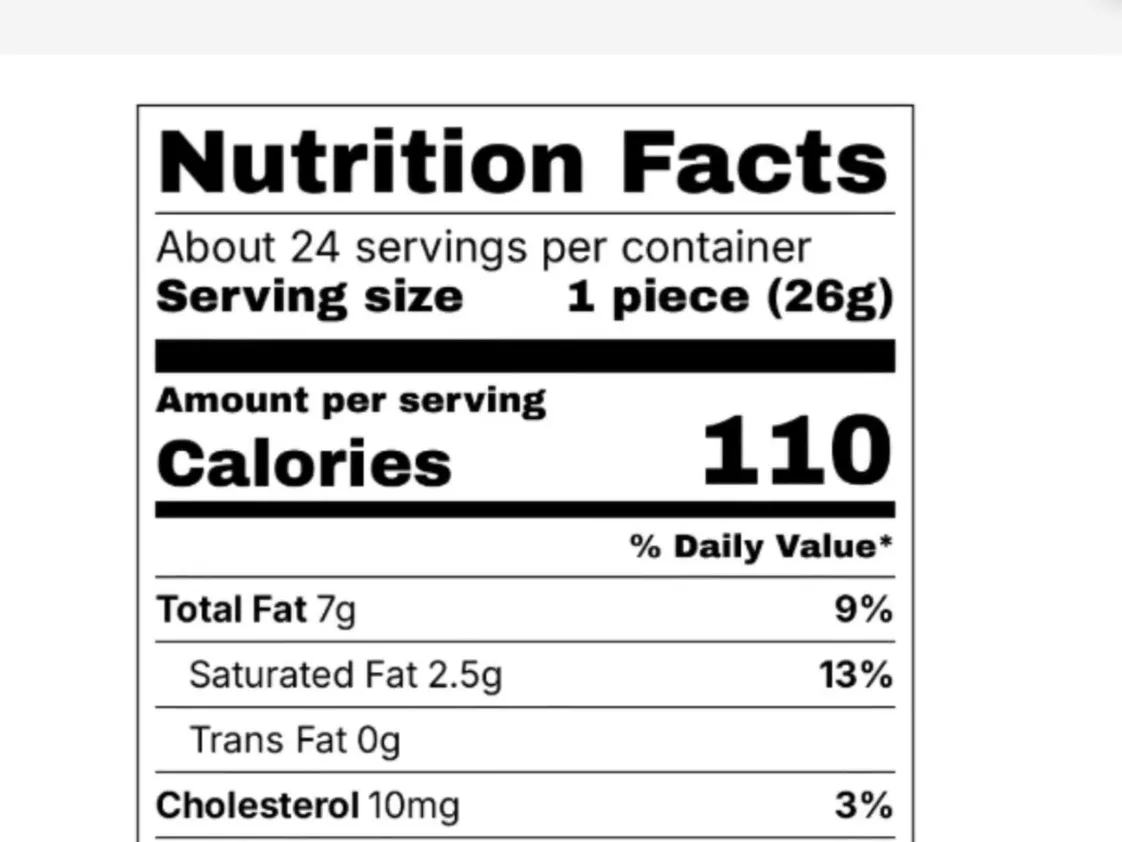
Studio, real UI: a sample recipe’s Nutrition Facts label exported as a PDF, its footer naming the recipe version

Proof

Every number shows its work.

The compliance engine calculates every number from its source data and FDA rules, with no AI in it. FDA does not review labels, so you check each number and sign off.

You paste Grams
4 tbsp honey, matched to Honey 84 g
1/2 tsp salt, matched to Salt, table 3 g
1 cup sliced almonds, matched to Nuts, almonds 92 g
3 cups rolled oats, matched to Cereals, oats, regular and quick, not fortified, dry 243 g
Batch, divided into 60 g servings 422 g
One 60 g serving, before and after FDA rounding
Nutrient Calculated On the label
Calories. Over 50: nearest 10 243.0 240
Total Fat. 5 g and up: nearest gram 8.78 g 9g
Sodium. Over 140 mg: nearest 10 168.0 mg 170mg
See every number worked out
  • Every rule quoted from 21 CFR.

    Each rounding and Daily Value carries the paragraph it comes from, word for word.

    The compliance engine
  • No AI in the math.

    AI stops at the suggestion you review and confirm. Grams to label is six fixed steps.

    How we calculate

In Studio

From pasted recipe to print-ready label.

Paste the recipe as you wrote it. Studio matches every line to a USDA food or one of your own, weighs it in grams and lays out the label. You approve each pick.
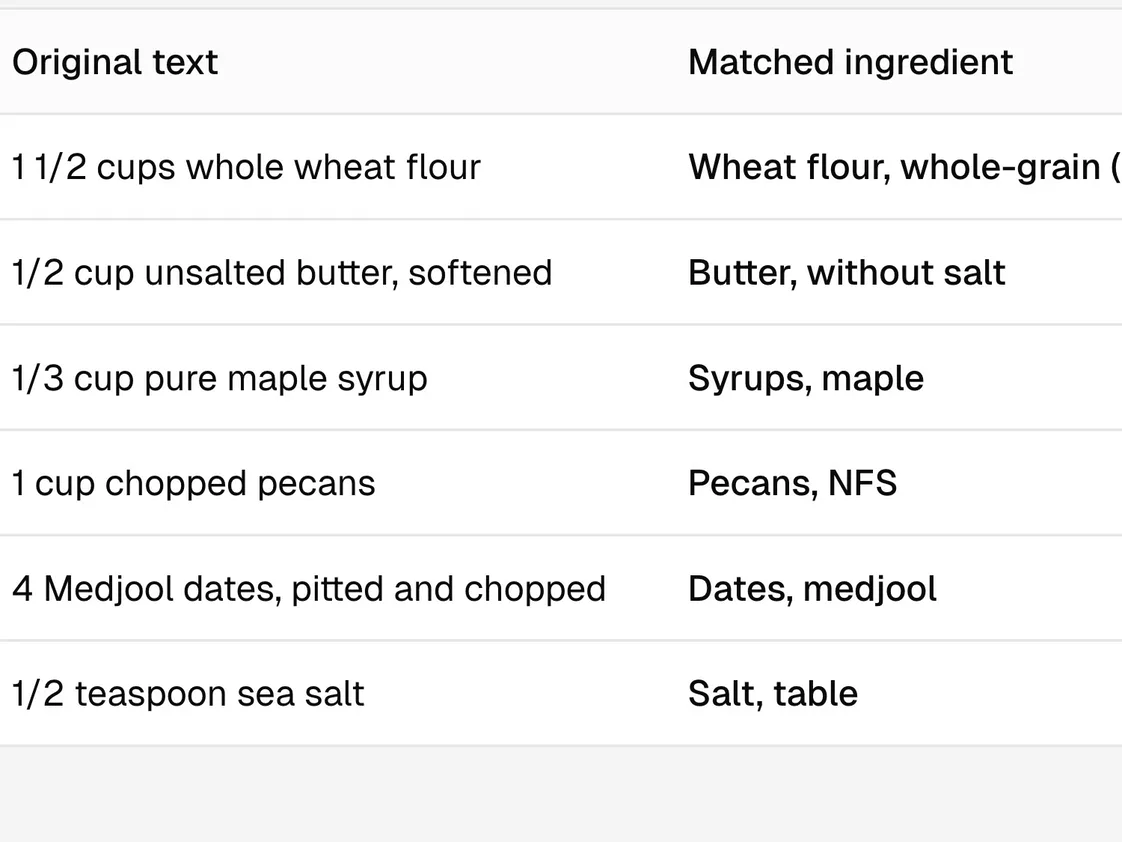
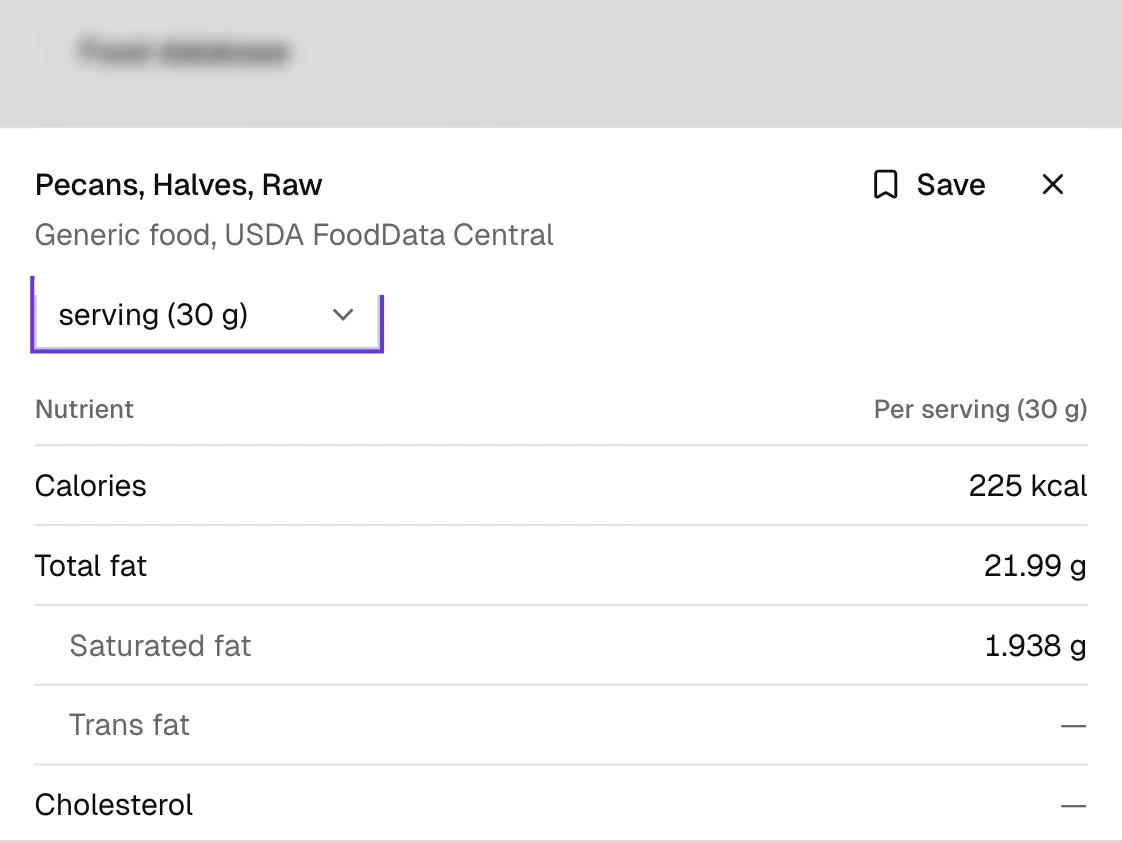
Studio, real UI: a sample recipe pasted in, each line matched to USDA with its weight in grams

Paste and Go. Paste the recipe as you wrote it. Each line comes back matched to USDA, with its weight in grams. More on Build

Find a food. Search USDA foods by name and see their nutrients for any portion. More on Build

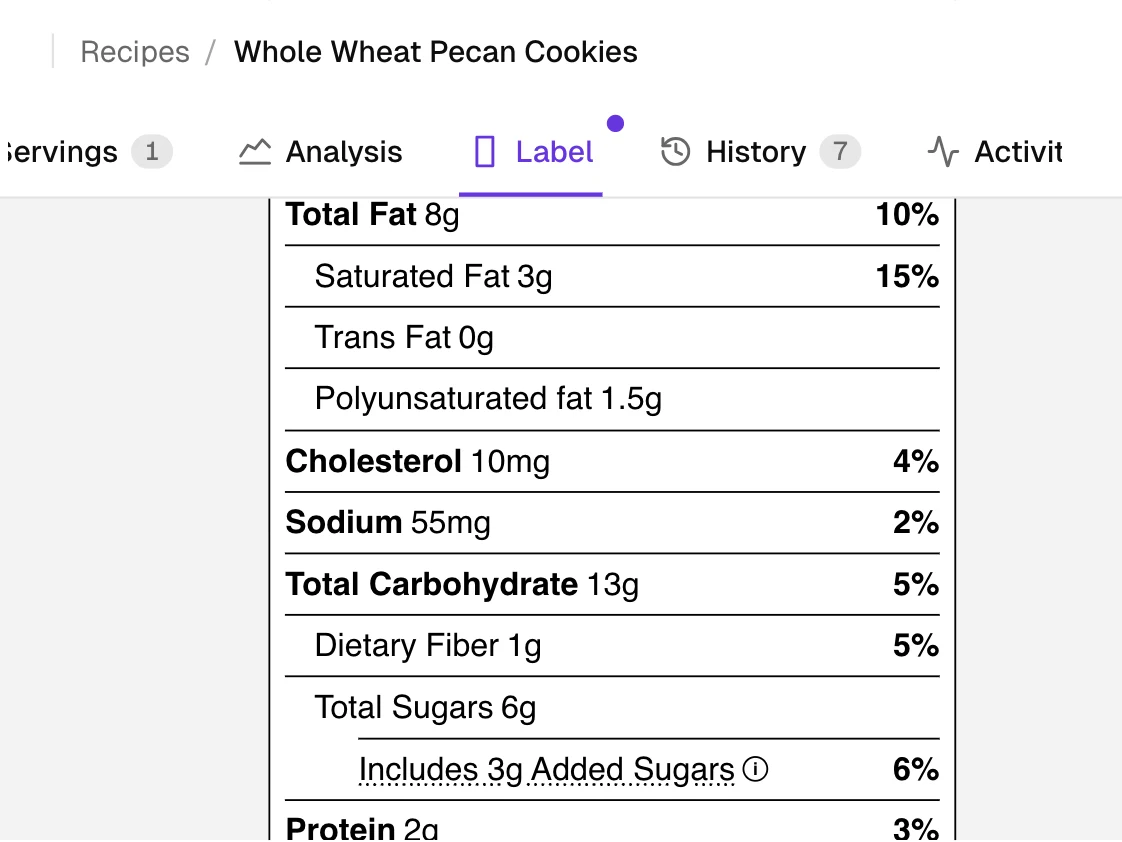
Label. Every required nutrient is checked. An optional one takes one switch. More on Label

Check. Pick a number on the label and see which ingredients put it there. More on Check

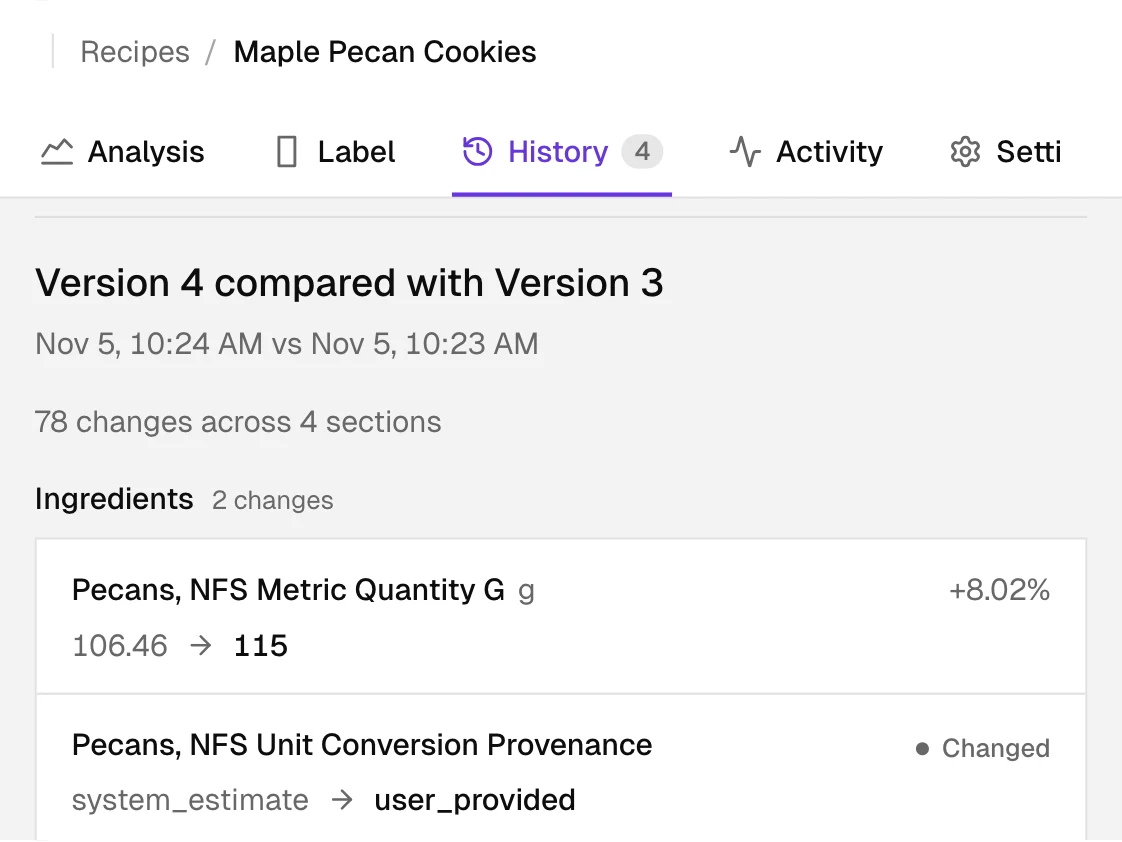
Prove. Every save is a version. Compare any two and see exactly what changed. More on Prove

The details

The fiddly parts of a label, worked out.

  • Four recipe lines become grams four ways: grams pass through, ounces use a fixed table, cups use the USDA portion, and only when no portion fits does AI estimateFour recipe lines and how each becomes grams. 250 g rolled oats: Grams pass through, no conversion, gives 250 g. 8 oz butter: Fixed table, 1 oz = 28.35 g, gives 226.8 g. 1 cup rolled oats: USDA portion, 1 cup = 81 g, gives 81 g. 1 knob ginger: AI estimate, no USDA portion fits, you can change it, gives about 25 g. The estimate is marked as an estimate.Your lineHow it becomes gramsGrams250 g rolled oatsGrams pass throughno conversion250 g8 oz butterFixed table1 oz = 28.35 g226.8 g1 cup rolled oatsUSDA portion1 cup = 81 g81 g1 knob ginger≈ AI estimateno USDA portion fits, you can change it≈ 25 gFour recipe lines become grams four ways: grams pass through, ounces use a fixed table, cups use the USDA portion, and only when no portion fits does AI estimateFour recipe lines and how each becomes grams. 250 g rolled oats: Grams pass through, no conversion, gives 250 g. 8 oz butter: Fixed table, 1 oz = 28.35 g, gives 226.8 g. 1 cup rolled oats: USDA portion, 1 cup = 81 g, gives 81 g. 1 knob ginger: AI estimate, no USDA portion fits, you can change it, gives about 25 g. The estimate is marked as an estimate.250 g rolled oats250 gGrams pass through: no conversion8 oz butter226.8 gFixed table: 1 oz = 28.35 g1 cup rolled oats81 gUSDA portion: 1 cup = 81 g1 knob ginger≈ 25 gAI estimate: no USDA portion fitsMarked as an estimate. You can change it.

    Cups and pieces, turned into grams.

    Each line takes a USDA portion. AI estimates a weight only when none fits, and marks it.

  • Fixing an AI match: 1 cup chopped pecans matched to pecans, dry roasted, swapped for Nuts, pecans by USDA search, 109 gA recipe line, 1 cup chopped pecans. The AI picked Pecans, dry roasted, the wrong food, so it is struck out. You search USDA for "pecans", pick Nuts, pecans and set its weight, 109 g, then confirm the line.Recipe line1 cup chopped pecansPecans, dry roastedAI pickpecansNuts, pecans109 gFixing an AI match: 1 cup chopped pecans matched to pecans, dry roasted, swapped for Nuts, pecans by USDA search, 109 gA recipe line, 1 cup chopped pecans. The AI picked Pecans, dry roasted, the wrong food, so it is struck out. You search USDA for "pecans", pick Nuts, pecans and set its weight, 109 g, then confirm the line.Recipe line1 cup chopped pecansPecans, dry roastedAI pickpecansNuts, pecans109 g

    A wrong match, fixed in one search.

    Strike the pick, search USDA by name, and the weight follows.

  • A serving of 2 pieces, 28 g, set against the 30 g reference amount for cookiesCategory: Bakery products, cookies, with a reference amount (RACC) of 30 g. One piece weighs 14 g. On a scale from 0 to 45 g, two pieces reach 28 g, the closest whole count to 30 g. A third piece, drawn dashed, would reach 42 g. The serving size is 2 pieces (28g).Bakery products, cookiesRACC 30 g0 g15 g30 g45 gRACC14 g14 g42 g3 piecesServing size2 pieces (28g)A serving of 2 pieces, 28 g, set against the 30 g reference amount for cookiesCategory: Bakery products, cookies, with a reference amount (RACC) of 30 g. One piece weighs 14 g. On a scale from 0 to 45 g, two pieces reach 28 g, the closest whole count to 30 g. A third piece, drawn dashed, would reach 42 g. The serving size is 2 pieces (28g).CookiesRACC 30 g0 g15 g30 g45 gRACC14 g14 g42 g3 piecesServing size2 pieces (28g)

    Serving size from FDA reference amounts.

    Your pieces are set against the RACC for the food’s category.

  • The added sugars review: honey adds sugar, the other ingredients do not, and the label prints Includes 10g Added SugarsA sample granola’s four ingredients, each with your answer to whether it adds sugar: honey yes, salt no, sliced almonds no, rolled oats no. You confirm the list, and the compliance engine prints the Added Sugars line from it: Includes 10g Added Sugars, 20% Daily Value, per 60 g serving.IngredientAdds sugar?HoneyYesSaltNoSliced almondsNoRolled oatsNoYou confirmIncludes 10g Added Sugars20%Compliance engine, no AIThe added sugars review: honey adds sugar, the other ingredients do not, and the label prints Includes 10g Added SugarsA sample granola’s four ingredients, each with your answer to whether it adds sugar: honey yes, salt no, sliced almonds no, rolled oats no. You confirm the list, and the compliance engine prints the Added Sugars line from it: Includes 10g Added Sugars, 20% Daily Value, per 60 g serving.IngredientAdds sugar?HoneyYesSaltNoSliced almondsNoRolled oatsNoYou confirmIncludes 10g Added Sugars20%Compliance engine, no AI

    Added sugars, one answer per ingredient.

    Say which ingredients add sugar. The label prints the line.

  • One custom ingredient and the three client recipes that use itA custom ingredient, Rolled oats, Lot 22, added once from the supplier’s spec sheet. It lists the 3 recipes that use it: Granola for Client A, Oat Date Bars for Client B, Breakfast cookies for Client C. When the supplier changes the ingredient, these are the recipes to check.Custom ingredientRolled oats, Lot 22From the supplier’s spec sheetUsed in 3 recipesGranolaClient AOat Date BarsClient BBreakfast cookiesClient COne custom ingredient and the three client recipes that use itA custom ingredient, Rolled oats, Lot 22, added once from the supplier’s spec sheet. It lists the 3 recipes that use it: Granola for Client A, Oat Date Bars for Client B, Breakfast cookies for Client C. When the supplier changes the ingredient, these are the recipes to check.Custom ingredientRolled oats, Lot 22From the supplier’s spec sheetUsed in 3 recipesGranolaClient AOat Date BarsClient BBreakfast cookiesClient C

    Your supplier’s ingredients, from the spec sheet.

    Enter one once and use it in every recipe. It ranks first in search.

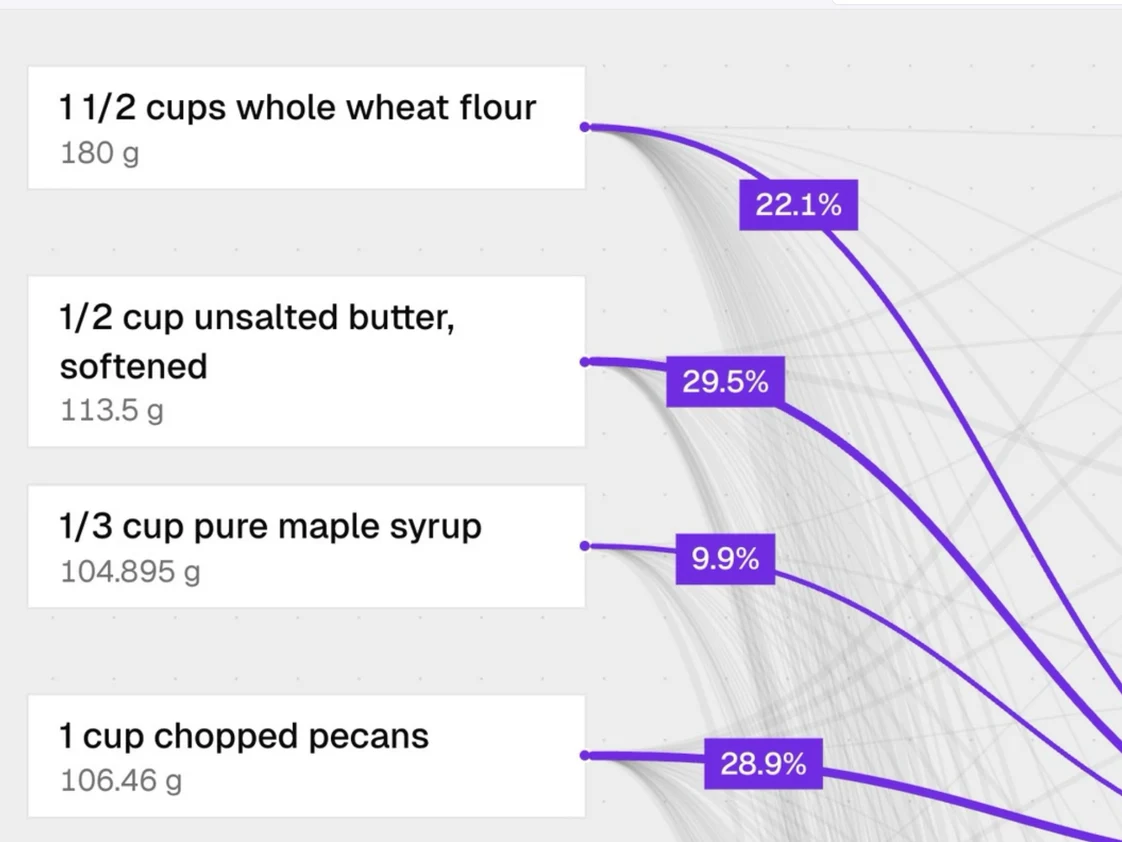
  • Where a recipe’s calories come from, for the whole batch and one serving: unsalted butter 29.5%, chopped pecans 28.9%, whole wheat flour 22.1%, maple syrup 9.9%, medjool dates 9.6%The analysis of a sample recipe. Each ingredient feeds Calories with its share: Unsalted butter 29.5%, Chopped pecans 28.9%, Whole wheat flour 22.1%, Maple syrup 9.9%, Medjool dates 9.6%. One serving, 2 pieces · 28 g, shows 130 Calories on the label.One serving · 2 pieces · 28 gCalories2 pieces · 28 g130on the labelWhere it comes fromShareUnsalted butter29.5%Chopped pecans28.9%Whole wheat flour22.1%Maple syrup9.9%Medjool dates9.6%Where a recipe’s calories come from, for the whole batch and one serving: unsalted butter 29.5%, chopped pecans 28.9%, whole wheat flour 22.1%, maple syrup 9.9%, medjool dates 9.6%The analysis of a sample recipe. Each ingredient feeds Calories with its share: Unsalted butter 29.5%, Chopped pecans 28.9%, Whole wheat flour 22.1%, Maple syrup 9.9%, Medjool dates 9.6%. One serving, 2 pieces · 28 g, shows 130 Calories on the label.One serving · 2 pieces · 28 gCalories2 pieces · 28 g130on the labelWhere it comes fromShare of the nutrientUnsalted butter29.5%Chopped pecans28.9%Whole wheat flour22.1%Maple syrup9.9%Medjool dates9.6%

    Every number traced to its ingredients.

    See which ingredients put the calories on one serving.

In ChatGPT or Claude

Your assistant asks. BetterMenu calculates.

We asked ChatGPT for a label for the sample granola in fresh chats. Two chats had BetterMenu not connected. Two had the BetterMenu app connected and used the same saved recipe.

ChatGPT on its own Same prompt, two fresh chats
  • Chat 1: about 7 servings, 9 g fat. Chat 2: about 8 servings, 11 g fat.
  • No source for any number
  • Called its own numbers estimates

ChatGPT, logged out, same prompt in fresh chats, Nov 10, 2026. Across six chats it gave 240, 250 and 260 calories. Results can vary by model and plan.

With BetterMenu connected Same saved recipe, two fresh chats

Chat A: the recipe pasted and saved

Part of the Nutrition Facts label BetterMenu made in the chat where the granola recipe was pasted and saved: Calories 240, Total Fat 9g 11%, Saturated Fat 1g 4%, Trans Fat 0g, Cholesterol 0mg 0%, Sodium 170mg 7%, Total Carbohydrate 36g 13%, Dietary Fiber 5g 18%, Total Sugars 11g, Includes 10g Added Sugars 20%.
See the full answer in Chat A: the recipe pasted and saved

Chat B: a new chat asks for the saved recipe

Part of the Nutrition Facts label for the saved recipe in a new chat: Calories 240, Total Fat 9g 11%, Saturated Fat 1g 4%, Trans Fat 0g, Cholesterol 0mg 0%, Sodium 170mg 7%, Total Carbohydrate 36g 13%, Dietary Fiber 5g 18%, Total Sugars 11g, Includes 10g Added Sugars 20%.
See the full answer in Chat B: a new chat asks for the saved recipe
  • Both chats: 240 calories, 9 g fat, 170 mg sodium
  • Each value traced to a USDA food and an FDA rule
  • Every version kept, and the label as a PDF, PNG or JPEG file

ChatGPT with the BetterMenu app connected, same saved recipe in two fresh chats, Nov 10, 2026. Chat B asked: “Show the Nutrition Facts label for my saved BetterMenu recipe Sample Granola. Don’t change the recipe.”

We send recipe lines only to AI providers that do not train on them and keep none of them after answering. The chat itself follows your assistant’s terms.

Pricing

Free to start. No card needed.

Make your first label today and upgrade when you need more.

See pricing

Questions

Questions people ask first

BetterMenu is the company, Formulate is its product for building Nutrition Facts labels, and Studio is the web app where you use it.

What is Formulate?

BetterMenu’s Nutrition Facts label maker for US packaged foods, in Studio (the BetterMenu web app), ChatGPT or Claude.

Can I use my supplier’s ingredients?

Yes. Add a custom ingredient once from its spec sheet. It ranks first in search and works in every recipe, next to the USDA foods.

What label does Formulate make?

The standard single-column US Nutrition Facts label, formatted per 21 CFR 101.9 and exported as PDF, PNG or JPEG. A package sold on its own that holds 200 to 300 percent of its reference amount (RACC) usually needs a dual-column label, under 21 CFR 101.9(b)⁠(12)⁠(i). For one of those, or another format such as tabular, talk to a founder.

Does AI work out the numbers on my label?

No. AI matches each line to a USDA food or one of your own, and in Studio suggests which ingredients add sugars. You review both, then change or confirm each. Weights come from USDA portion weights and fixed tables. AI estimates one only when no portion fits, marked for you to change. The compliance engine does every calculation, rounding and %DV under fixed FDA rules (21 CFR 101.9), with no AI in it. We send recipe lines only to AI providers that do not train on them and keep none of them after answering.

ChatGPT and Claude can already give me nutrition. Why use BetterMenu?

On their own, they estimate nutrition from what the model learned, with no source for any number, and the label can come out different from one chat to the next. With BetterMenu connected, every nutrient value comes from USDA data or your own ingredients and fixed FDA rules: same saved recipe, same label. You also get the FDA serving size, rounding and %DV, every version kept, and the label as a PDF, PNG or JPEG file. When a retailer, co-packer or inspector asks how a number was made, you can show the recipe version, the source behind each ingredient and when the label was exported. You keep working in ChatGPT or Claude.

Does it work for co-packers and label consultants?

Yes, for one person today. One account holds every client’s recipes. Each version is kept, and each label’s footer names the recipe version it came from. For a team, talk to a founder.

Do I still need a lab test?

Usually not. Many brands label from ingredient data, as Formulate does. For recipes where baking, frying or drying changes the weight a lot, a lab test is a good way to confirm the numbers. Talk to a founder about your recipe.

Is a Formulate label approved by FDA?

No. Labels are formatted per 21 CFR 101.9, but FDA does not review or approve labels. You stay responsible for your package.

Is there a free plan?

Yes. Free includes 3 recipes in total and 25 Paste and Go ingredients a month, with no card. Free exports carry a DRAFT watermark. Sign-up starts a 7-day Starter trial first. What each plan includes is on the pricing page.

Who builds it

Built by its founders, who answer you.

Engineering is led by a co-founder with 20 years building software at Oracle, Yahoo and startups. Every nutrient value on your label shows its source and the FDA rule behind it, for you to check.

Start with one recipe.

See where every number on its label comes from.